
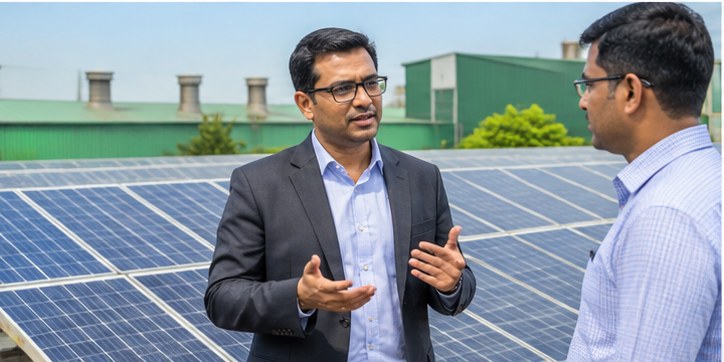
Leadership editorial showcase: this example uses a fictional profile and company, and an illustrative generated image.
Energy planning is most useful when it connects long-term sustainability goals with everyday operational decisions. Factories and office facilities often have different patterns of equipment use, occupancy and energy demand.
Before selecting an intervention, teams can map their major uses, review maintenance practices and identify what can be measured reliably. An energy baseline should be clear enough for finance, engineering and site management to discuss together.
Responsible planning also means comparing options on practical terms: installation disruption, safety, maintenance ownership, total cost and expected operating benefits. This helps leaders avoid treating a single technology as a universal answer.
Progress depends on routines as much as investments. Regular reviews, clear accountability and honest reporting make it easier to turn a sustainability statement into ongoing operational learning.
This is an illustrative professional analysis, not a reported interview, endorsement or real-world company statement.



Conversation